How to Prepare Your Band for a Live Tracking Session
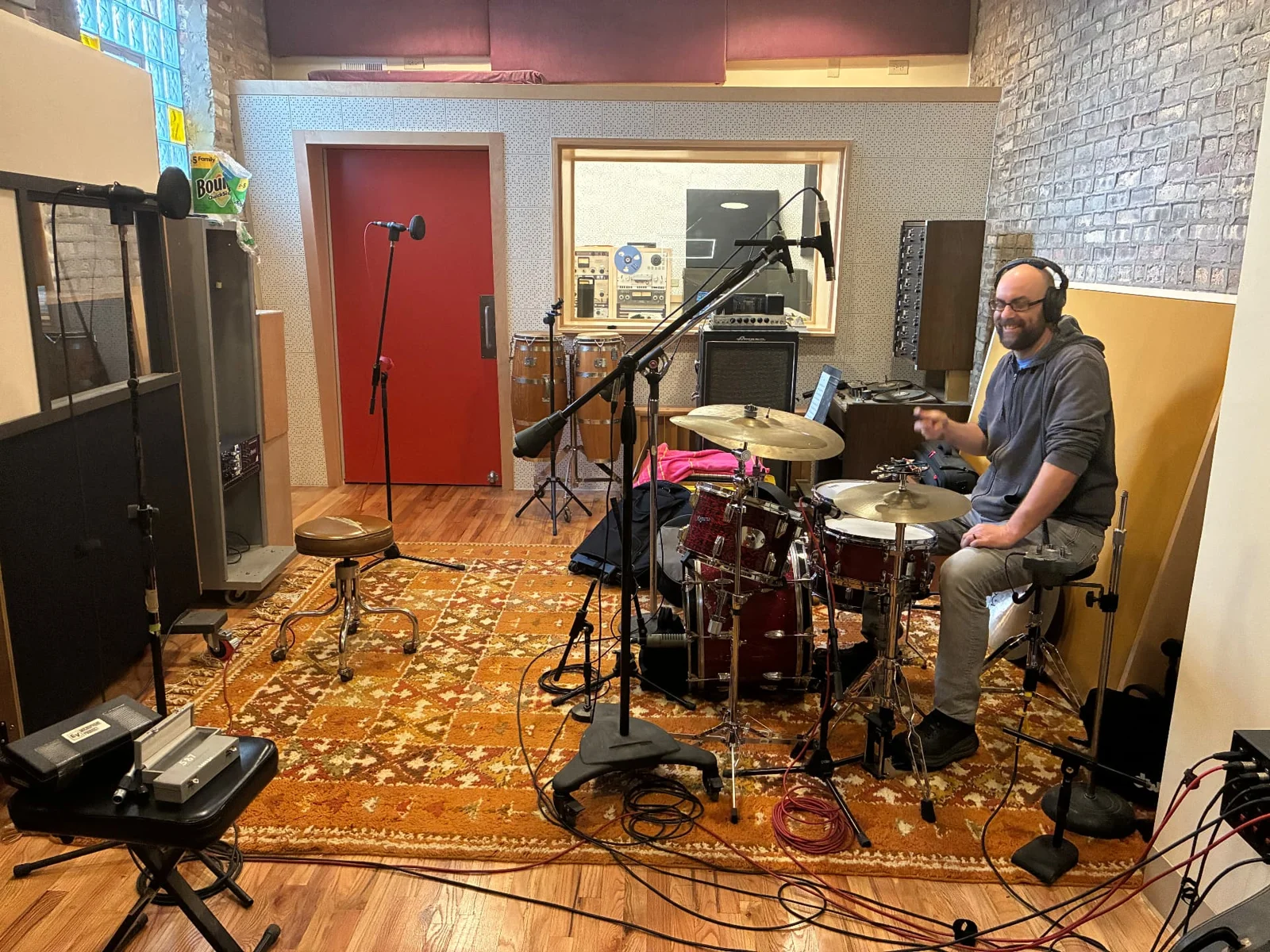
Capture the Band, Not Just the Parts
When a band plays together, the musicians respond to each other. The drummer leans into a chorus, the bass follows, and a guitar part lands differently because somebody heard what happened across the room. Recording that interaction is the reason to track live instead of assembling every instrument separately.
But playing together doesn't mean showing up and hoping. Preparation decides how much of the day we spend capturing performances and how much we spend sorting out problems. Here's how I'd prepare your band for a live tracking session, from the last rehearsal to the first rough mix.
Rehearse the Arrangement, Not Just the Song
Run each song from the count-in through the final ring-out. Agree on the intro length, verse and chorus counts, transitions, and ending. An ending that works on stage because everyone watches the drummer can still work in the studio, but everyone needs to know what they're watching for.
Decide who plays which parts before recording day. If two guitarists fill the same space, try different voicings or registers in rehearsal. Record a phone demo and listen back together. That will reveal a crowded chorus faster than another conversation about whether it feels crowded.
I don't want to rehearse all the personality out of a song. Leave room for spontaneous playing. Just separate intentional choices from parts nobody has decided yet.
Find Your Tempos and Decide About a Click
Try the songs at several tempos in rehearsal and write down the versions that feel best. A few beats per minute can change whether a vocal feels relaxed or rushed. Include the tempo with the demo so we have a useful starting point.
A click helps when you're planning edits, layered overdubs, programmed parts, or tempo-synced effects. It isn't automatically the right choice for every band. A song that naturally pushes and pulls may feel better without one.
If you're using a click, rehearse with it as a group, not just with the drummer wearing headphones. Practice the count-in, quiet sections, and stops. Tell me about tempo changes before the session so we can plan a tempo map rather than wrestle with one while everyone waits.
Get Your Gear Session-Ready
Have instruments serviced ahead of time if possible. Check guitar and bass intonation, action, tuning stability, and noisy controls. Put on fresh strings a few days ahead, stretch them, and play them in. Recording day isn't the ideal time to discover that your favorite guitar won't stay in tune past the fifth fret.
For drums, replace worn heads early enough to seat and tune them. Check hardware for rattles, tighten what needs tightening, and bring spare sticks. Talk to me about the drum sound you want before choosing heads or changing the kit.
Test amps and pedalboards at the volume you'll actually use. Check every cable, power supply, and battery. A little noise that disappears in a rehearsal room can become very obvious with a microphone in front of it. Bring spare cables and batteries, and a backup instrument when you can. The backup doesn't need to win a beauty contest. It needs to work.
My Tracking-Day Checklist
I want you prepared to keep the session going, but also prepared to wait while someone works on a part or I set up something new. Here's what I'd put on the list:
- Main instruments, plus backup instruments where practical
- Extra guitar strings, spare cables, batteries, and drumsticks
- Song order, tempos, keys, and arrangement notes
- Lyric sheets and chord charts for anyone who needs them
- Demos and a few reference tracks, downloaded before you arrive
- Snacks, water, and a plan for lunch
- A good book for the stretches when somebody else is working
Keep food and drinks away from instruments and recording equipment. Label your cases and accessories so packing up doesn't turn into a group investigation. Confirm what the studio supplies and what you need to bring instead of assuming there's a spare everything in a cupboard.
What I've Seen Stop a Session
I've seen sessions stalled for hours because of mixed-up call times, unprepared parts, or broken equipment. Those mistakes can cost hundreds of dollars and use up the energy everyone brought to the room.
Confirm the address, arrival time, and who needs to be there when. Share that information in one message with the whole band. If a part isn't ready, say so before the session. We can plan time to work on it, simplify it, or leave it for an overdub instead of discovering the problem during a take.
The most professional people I see come in prepared, have great attitudes, and go with the flow. That matters when plans change. Being ready doesn't mean demanding that everything happen exactly as expected. It means having enough sorted out that you can adapt and make the most of the studio time.
How a Tracking Day Runs
Before the session, we have a pre-production call about songs, instrumentation, references, and priorities. I'll want to know which songs matter most and whether we're aiming for live basics or a more finished production.
Once you're in the room, setup comes first: instrument placement, microphones, tuning, levels, and headphone mixes. Then we play through something and listen. Moving a microphone or adjusting an amp now is usually more useful than promising to fix everything later.
Here's an example day, not a promise about how many songs we'll finish:
- 10:00 AM: Load in, set up instruments, and confirm the plan
- 10:30 AM: Microphones, sounds, and headphone mixes
- 12:00 PM: Basic takes, starting with a rehearsed song
- 1:30 PM: Lunch and a quick progress check
- 2:00 PM: More takes and keeper decisions
- 4:00 PM: Priority overdubs and repairs
- 5:30 PM: Rough mixes, file checks, and wrap-up
I listen for a performance worth keeping before chasing every small flaw. We'll compare takes, make decisions, and note what needs another pass. Overdubs might include lead vocals, solos, doubles, or a part we intentionally left out of the live take. Leave time to save, check backups, and make rough mixes. Those aren't jobs to squeeze into the last thirty seconds.
Bleed, Isolation, and Headphone Mixes
When musicians share a room, microphones hear more than the instrument directly in front of them. That's bleed. Some of it helps the recording feel connected; too much can limit our ability to edit or balance individual parts.
We can use placement, screens, isolation spaces, or direct signals to manage it. A scratch vocal gives everyone a guide without requiring that vocal to become the final take. The setup depends on the music, the room, and how much separation we need.
Tell me if you can't hear something in your headphones. Ask before the take, not after an hour of guessing where the vocal is. Keep listening levels comfortable. A useful headphone mix lets you hear the band and play confidently without turning everything up.
Choose the Room for the Band
A smaller studio can be a good fit for vocals, overdubs, singer-songwriters, and small groups. My Oak Park room has an isolation booth and works for those focused sessions. A full band with loud amps, a bigger drum sound, or more players may need a larger Chicago tracking room with the space and separation to support it.
We'll choose based on your lineup and the sound you want, not just the room's appearance. You can read about both options on my Recording & Live Band Tracking page.
After Tracking: Keep the Session Organized
Listen to the rough mixes, make one shared set of notes, and agree on the keeper takes. Save the tempo, key, track names, and any decisions about effects or edits. That information should travel with the session, not disappear into someone's text messages.
If another engineer will mix the recordings, my session-prep checklist covers exports and the extras to send. If you'd like me to handle the next stage, here's how my mixing process works. Good preparation carries through from rehearsal to the final recording, and it gives us more time to pay attention to the music.